
The Dakota in Iowa
By Kevin Mason and James A.M. Ritchie
For over a century and a half, Iowa’s history books framed the 1857 events at Spirit Lake as a brutal, isolated incident: savagery erupting into an otherwise peaceful march of civilization across the plains. But history is rarely so tidy. The story of Spirit Lake is not a story about a single violent episode. The story represents the tangled, often tragic, collisions between peoples in the age of American expansion. To understand it we must look back at a story centuries long. By 1857 the Dakota had lived in Iowa for centuries, developing lifeways that maintained a delicate balance with the natural world.
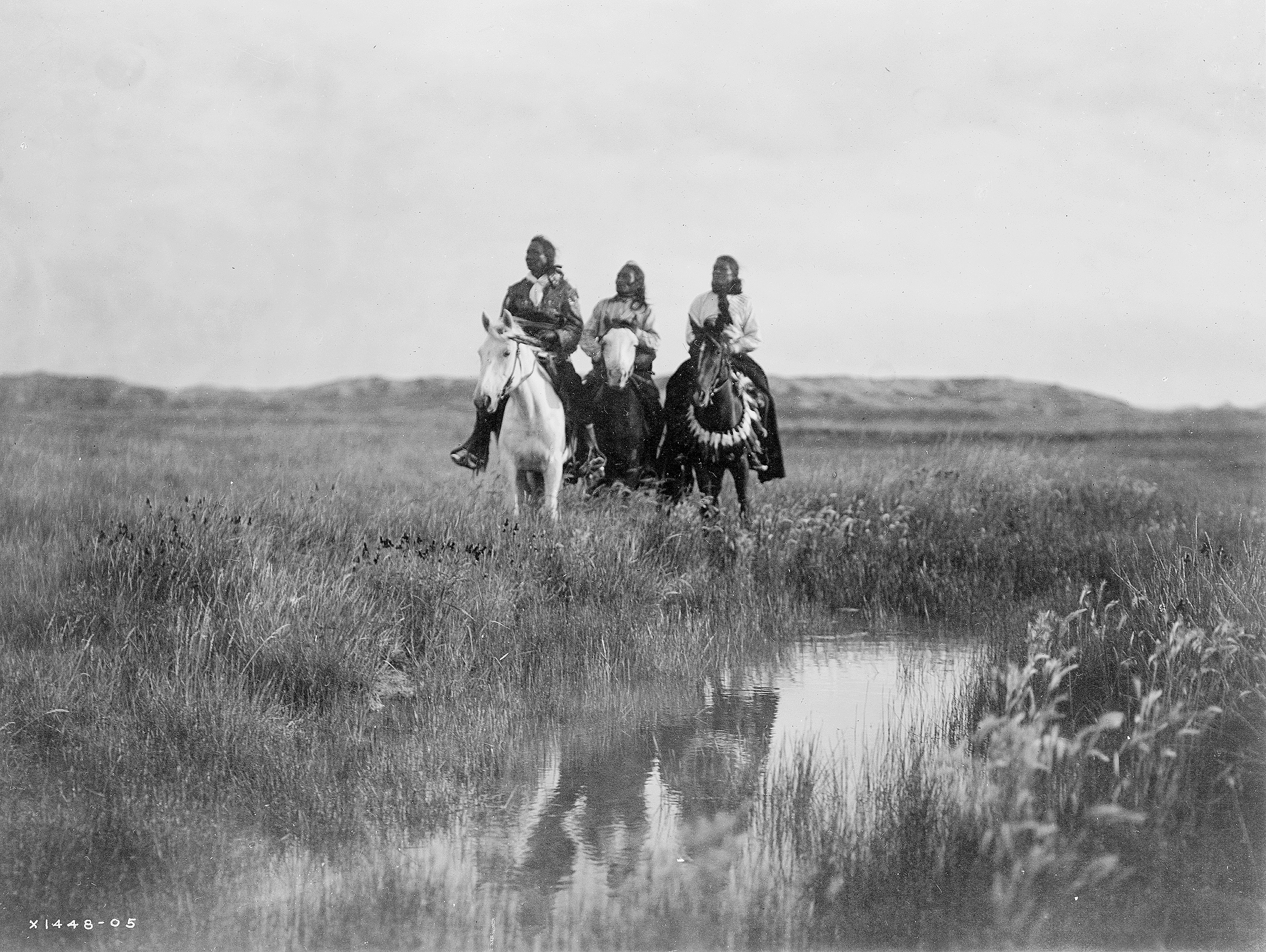
Three men on horses in the Great Plains ca. 1905
(Image: Library of Congress)
The World of Oceti Ŝakowiŋ
The term “Sioux” is widely considered offensive because it is a colonial, derogatory label derived from an Ojibwe word meaning “little snakes” or “enemies.” The people themselves prefer the name Oceti Ŝakowiŋ, meaning “Seven Council Fires,” a sophisticated political and cultural confederation made up of Dakota, Nakota, and Lakota divisions. Each division contains independent groups with their own governance but shared cultural foundations, allowing for flexible alliances, resource management, and collective decision-making.
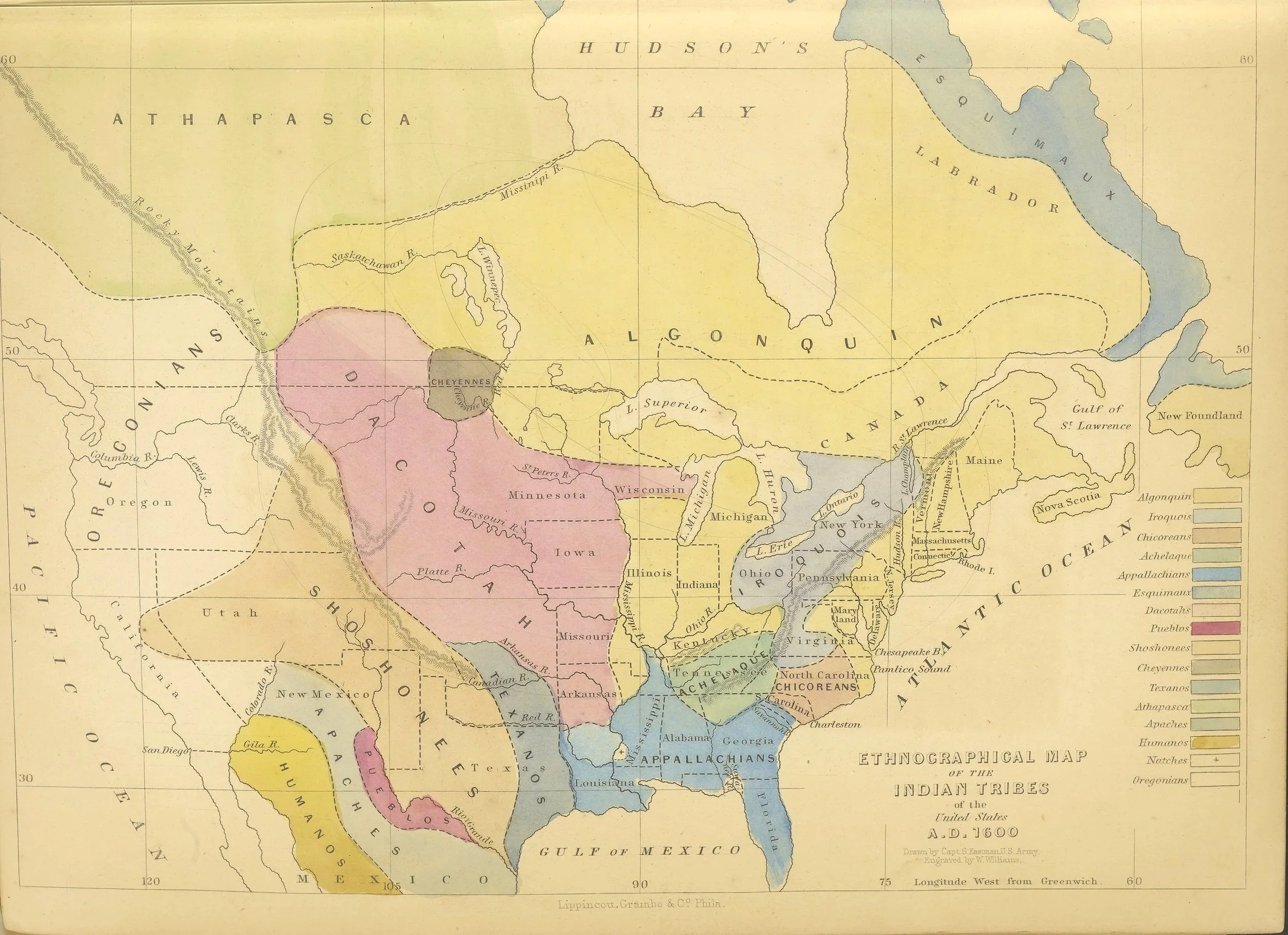
Ethnographical Map of the Indian Tribes of the United States A.D. 1600
(Map: USDA National Agricultural Library)
The Dakota lived throughout Iowa. Archaeology, historical records, and Dakota oral traditions show that Dakota communities occupied the Little Sioux River region for centuries — dating back at least to the early 1600s and rooted in earlier Oneota cultural traditions. Their long-term presence is reflected in Iowa place names such as Dakota City and Titonka.
The Dakota organized their homelands around “wita,” places of refuge and resources that structured their territorial system. Northwestern Iowa — especially the lands surrounding the Little Sioux River and the broader “Great Oasis” region — formed a vital part of Dakota territory, offering fertile land, abundant game, and strategic waterways for travel, trade, and defense.
By the 1850s, Dakota movements in the area reflected efforts to defend what they viewed as the southernmost portion of their ancestral homeland, rather than incursions into foreign territory.
The Dakota in an Evolving Iowa Ecology
The 1857 violence along the Little Sioux River and at Spirit Lake cannot be understood without recognizing the massive environmental destruction and cultural displacement caused by American expansion. As Euro-American settlers transformed 98% of Iowa’s prairie and wetland ecosystems into farmland, they destroyed the ecological foundation that had sustained Dakota communities for centuries. This upheaval—combined with failed treaties, poor diplomatic efforts, and the harsh winter of 1856–57—created a crisis that undermined Dakota survival.
For generations, the Dakota practiced sophisticated, sustainable environmental stewardship. They managed wildlife through seasonal movements, selective fishing, controlled burns to maintain bison grasslands, and careful regulation of hunting to preserve animal populations. Their active ecosystem management supported the abundant biodiversity early American observers described.
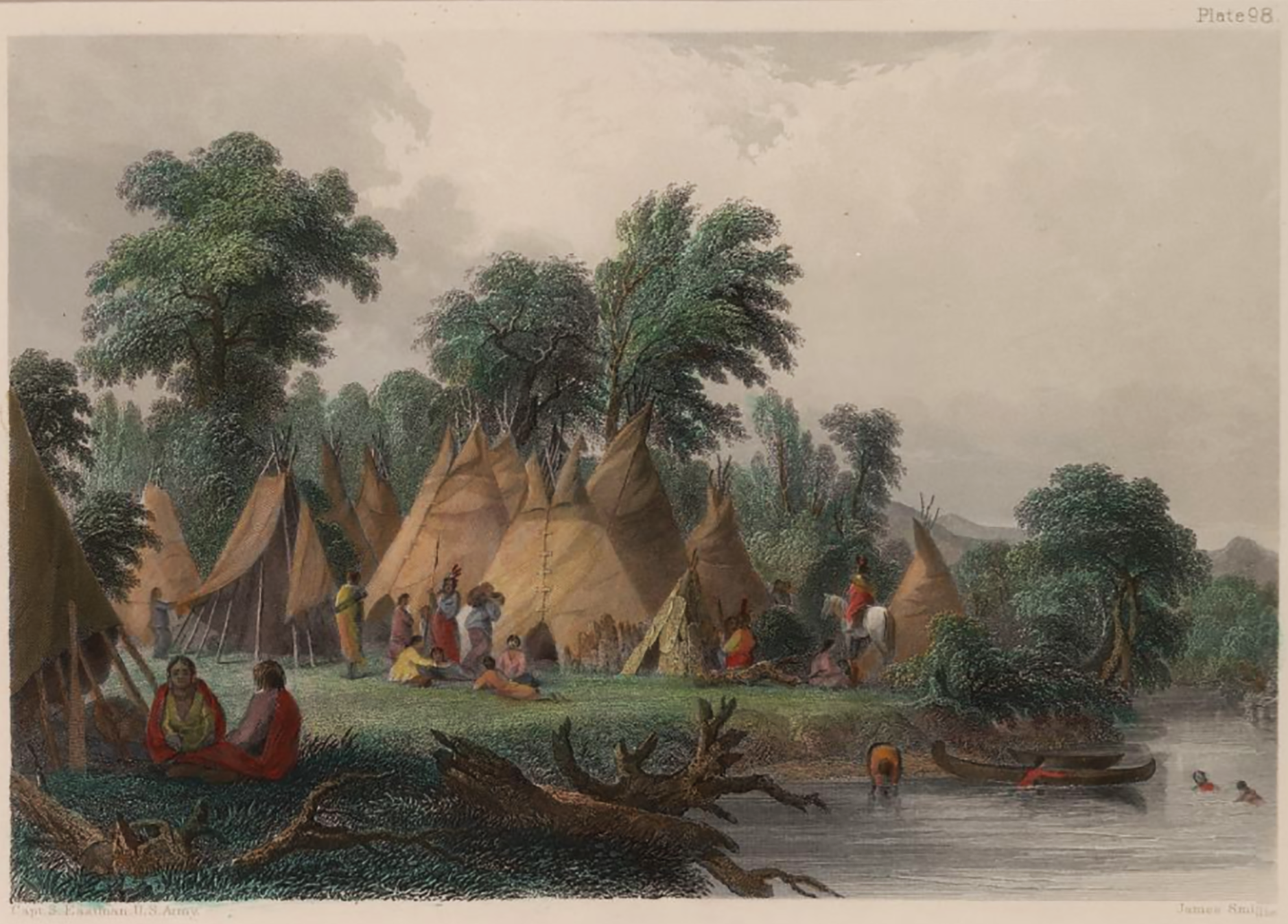
A Dakota Encampment by Seth Eastman
(Image: Minnesota Digital Library)
Euro-American arrival brought rapid ecological collapse. Bison and elk populations, once numbering in the thousands, were nearly exterminated by the 1870s, depriving the Dakota of key food sources. As wildlife vanished and settlers spread across northern Iowa, Wahpekute bands became increasingly scattered and vulnerable.
Amid these pressures, Dakota leaders like Inkpaduta—struggling to protect their homeland and adapt to shifting power dynamics—faced impossible choices. The Spirit Lake tragedy emerged from a specific convergence of environmental destruction, cultural conflict, and political failure. It was not an isolated incident but the result of systemic disregard for Indigenous sovereignty, unsustainable land-use changes, and broken U.S. policies.
The Dakota in the Middle Ground
The Wahpekute, according to descendants such as Chief Frank Brown, served as the professional military force of the Oceti Ŝakowiŋ (Seven Council Fires). Rather than representing a single location, they drew members from across Dakota and wider Siouan society through birth, adoption, or voluntary association. Their role resembled a standing army, unlike European militias made up of temporary conscripts. This specialization allowed the Oceti Ŝakowiŋ to maintain a highly skilled military while other Dakota communities focused on food production, crafts, hunting, and trade.
This system reflected a sophisticated division of labor: the Wahpekute relied on other Dakota groups for economic support, while providing protection and military expertise in return. Leaders like Wanata exemplified how individuals could hold influence both within their home communities and within the Dakota military structure. Overall, the Wahpekute strengthened intercommunity ties and enabled more efficient and professional defense across the confederation.
The Onset of the American Era
The Dakota experience with U.S. treaty-making reveals a consistent pattern of fraud, coercion, and misunderstanding that enabled American seizure of Dakota lands and fueled Wahpekute distrust. The pattern began with Zebulon Pike’s 1805 “treaty,” in which he secured 100,000 acres at the Mississippi–Minnesota confluence under highly questionable circumstances—distributing liquor, lacking witnesses, and allowing Congress to later insert a token payment of only $2,000. The Dakota likely believed they were permitting trading posts, not ceding land.
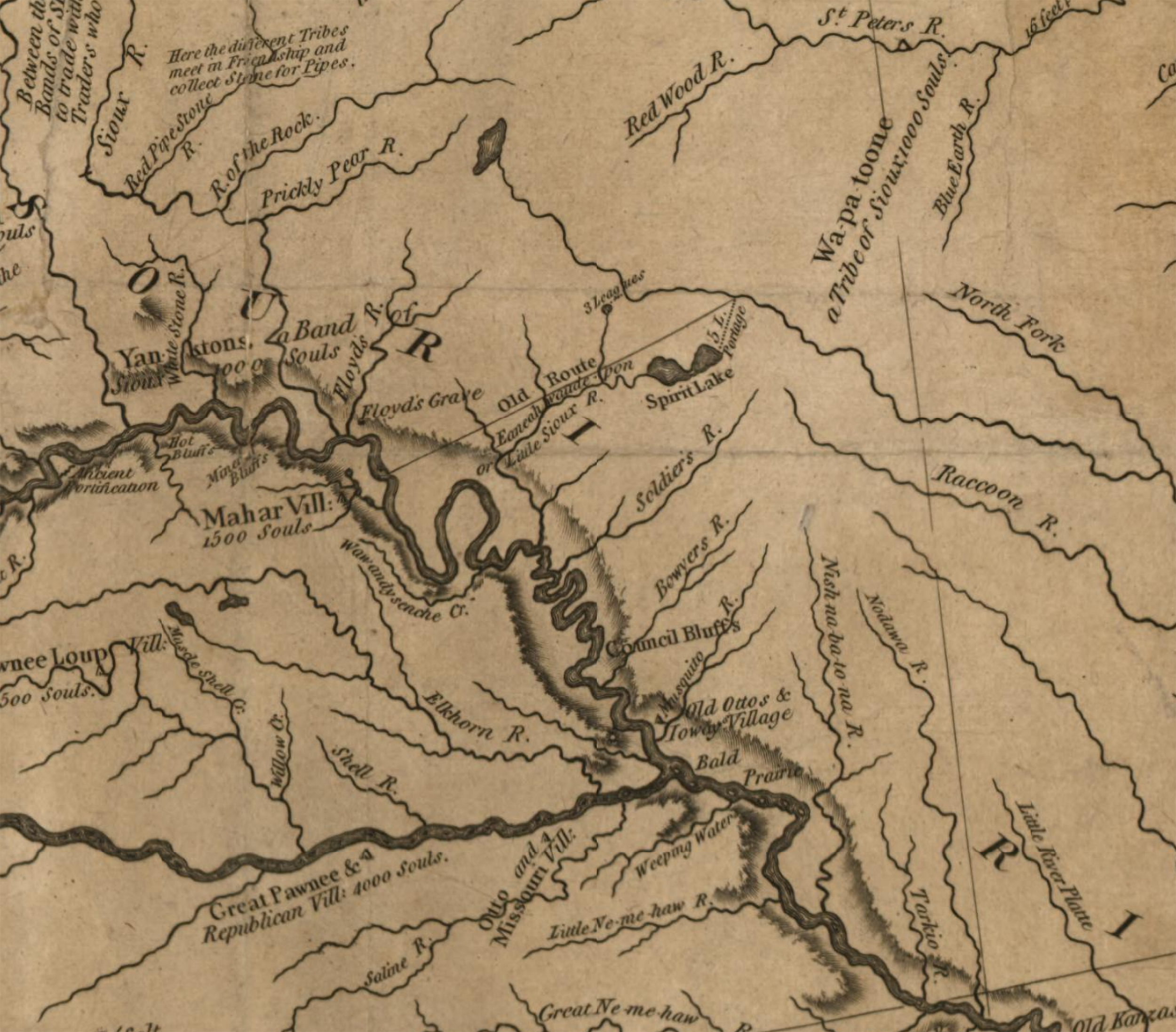
A map from the 1804 Lewis & Clark Expedition identifying; ‘Eaneahwaudepon’ or ‘The Little Sioux River’
(Map: Library of Congress Geography and Map Division Washington, DC)
Subsequent treaties, including Prairie du Chien agreements in 1825 and 1830, continued this pattern. Boundary disputes escalated immediately, and when Wambdi Sapa (Inkpaduta’s father) sought American justice after a Sauk leader killed his wife, U.S. officials failed to act. Forced to seek his own justice, he and his followers refused to sign later treaties. As later agreements in the 1830s–1850s stripped Dakota land and attempted their removal from Iowa, the Wahpekute continued to travel their ancestral territory without recognizing U.S. authority.
Because they never consented to these treaties, American officials later labeled Wambdi Sapa, Inkpaduta, and their followers as “renegades,” using their refusal to sign unjust agreements as a pretext to dismiss their legitimate territorial claims.
Wahpekute Resilience in a Changing World
As the United States expanded westward, Indigenous nations were pushed west ahead of settlers, generating new conflicts and reshaping territorial dynamics. The arrival of displaced groups like the Sauk and Meskwaki intensified clashes with the Dakota, while firearms and European diplomacy altered Indigenous warfare and sovereignty.
The Dakota—especially the Wahpekute—endured catastrophic population loss when a smallpox-infected steamboat triggered the 1837 epidemic, reducing their numbers by up to 75% and severely weakening their military and territorial defense. This crisis struck just as the environment around them was rapidly collapsing.
By the mid-1800s, the Dakota faced extreme ecological stress: declining game, and livestock-driven landscape changes that disrupted long-standing seasonal movement and food systems. Despite these pressures, Inkpaduta continued leading his people according to Dakota traditions. But by the 1850s, U.S. agricultural expansion, environmental disruption, and federal policies aimed at Dakota removal made survival within their Iowa homelands increasingly untenable.

A 1848 painting by Seth Eastman titled; “Sioux Indians Breaking Up Camp”
(Painting: Seth Eastman 1848, Museum of Fine Arts, Boston)
The Final Iowa Frontier
The 1851 treaties finalized the U.S. government’s legal strategy to dispossess the Dakota, selling nearly all remaining Dakota lands for minimal compensation and pushing Indigenous occupation out of Iowa. While most Dakota bands were confined to a narrow reservation along the Minnesota River, the Wahpekute—led by figures like Inkpaduta—refused to sign the treaties and continued living traditionally along the Blue Earth, Des Moines, and Little Sioux Rivers. However, their ability to hunt and fish was increasingly constrained by resource depletion and the growing presence of Euro-American settlers.
As U.S. expansion deepened, military forts were constructed to enforce federal control and support settlement. Forts gradually extended up the Des Moines River, culminating in the founding of Fort Dodge in 1850 near Wahpekute territory. Although the fort was decommissioned in 1853, its establishment signaled to settlers that the region was open, even though Wahpekute groups still lived and traveled there.
This disconnect—settlers believing the Dakota had left while the Wahpekute continued their traditional seasonal patterns—became a major source of rising conflict in the mid-1850s.
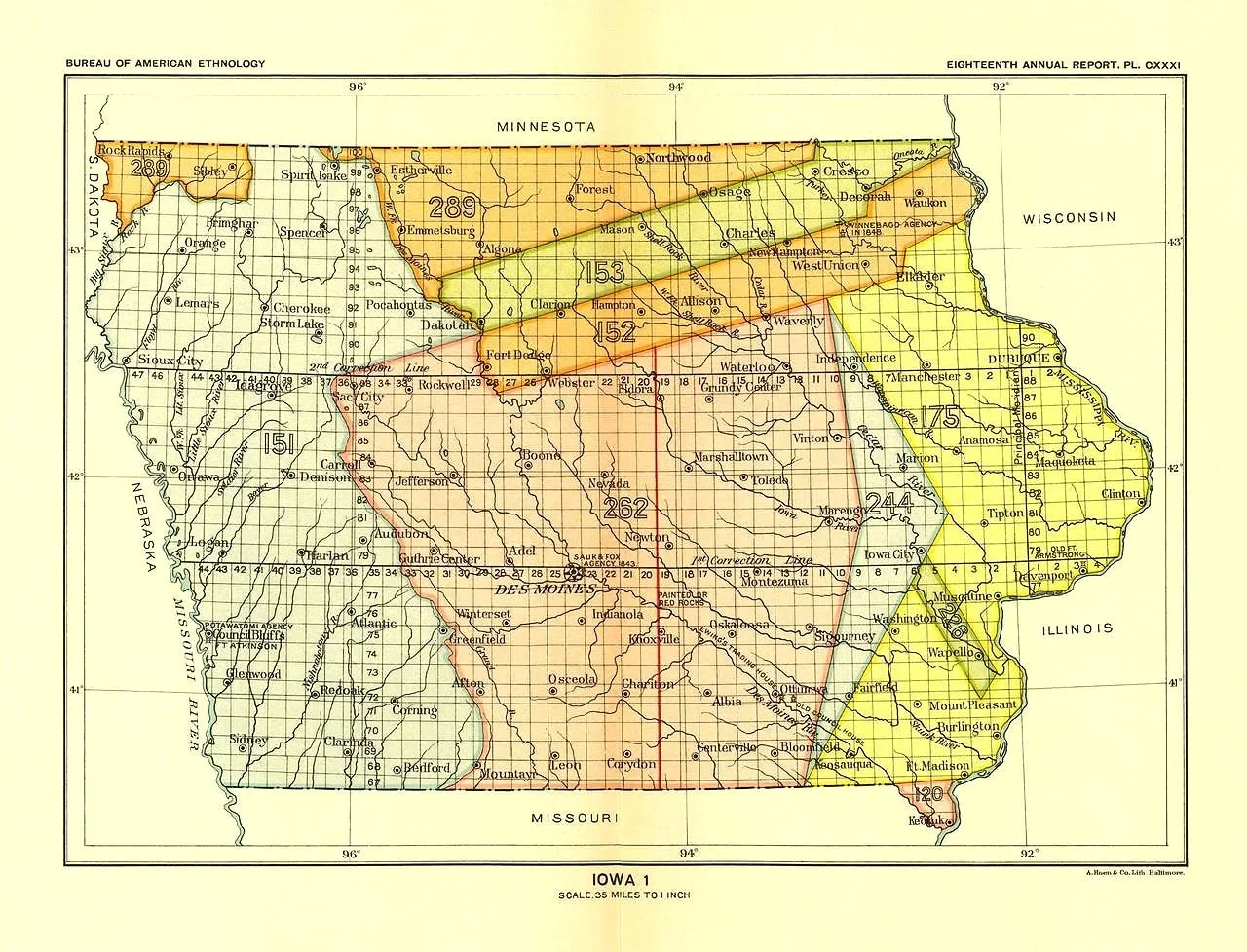
Map showing the land ceded in the state of Iowa to the United States by Native Americans in various treaties
(Map: Royce, Charles C. 1899, Library of Congress)
The Complex Legacy of Leadership
Between the closure of Fort Dodge in 1853 and the Spirit Lake violence of 1857, Inkpaduta continued moving throughout northern Iowa, responding pragmatically to settlers depending on whether they posed threat or offered cooperation. While he traded peacefully with some, he forcefully challenged others who encroached on Dakota territory.
Rising tensions were fueled by earlier events involving settler Henry Lott, a notorious trader whose theft, illegal liquor sales, and hostility toward Native communities set the stage for tragedy. In 1847, after Dakota leader Sintominiduta traced stolen horses to Lott’s cabin a confrontation led to the destruction of Lott’s homestead and the death of his son, Milton. Lott vowed revenge.
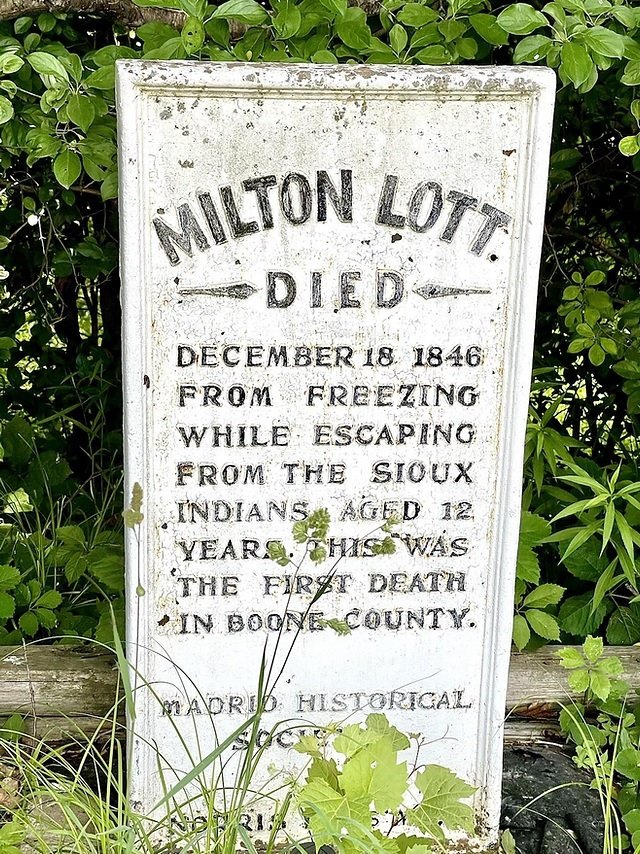
Milton Lott’s tombstone in Boone County.
(Image: Kevin Mason, Notes on Iowa)
Years later, after relocating upriver, Lott murdered Sintominiduta under the guise of friendship and then massacred several women and children before fleeing. American authorities failed to apprehend him, and the subsequent murder trial—held without a defendant and marred by a falsified interpretation of testimony—ended in injustice and desecration, where the prosecuting attorney Granville Berkley posted Sintominiduta’s head on a pike for public display outside the courthouse. These events helped collapse relations between the band of Wahpekute Dakota under Inkpaduta and the U.S. government, shaping the escalating conflict that followed.
The Crisis Winter of 1856-57
By the winter of 1856–57, decades of environmental destruction, loss of territory, and intensifying settler hostility pushed Inkpaduta and his Wahpekute band to a breaking point. After Fort Dodge was abandoned, American settlement surged into northwestern Iowa while the Dakota continued their seasonal movements along the Little Sioux River. Relations were initially peaceful, but the Great Blizzard of 1856 and widespread crop failures left both settlers and the Wahpekute in crisis. As food shortages worsened, conflicts escalated over stolen game, retaliatory violence, and mounting settler resentment.
In February 1857, settlers at Smithland accused the Wahpekute of theft and formed a militia that forcibly disarmed and expelled the band into the deadliest winter in Iowa’s history. Starving and desperate, the group moved north, losing a grandchild along the way and increasingly taking supplies from cabins to survive. Tensions exploded in Gillette’s Grove when a settler killed and beheaded Tate Duta, one of Inkpaduta’s warriors, further deepening the cycle of violence.
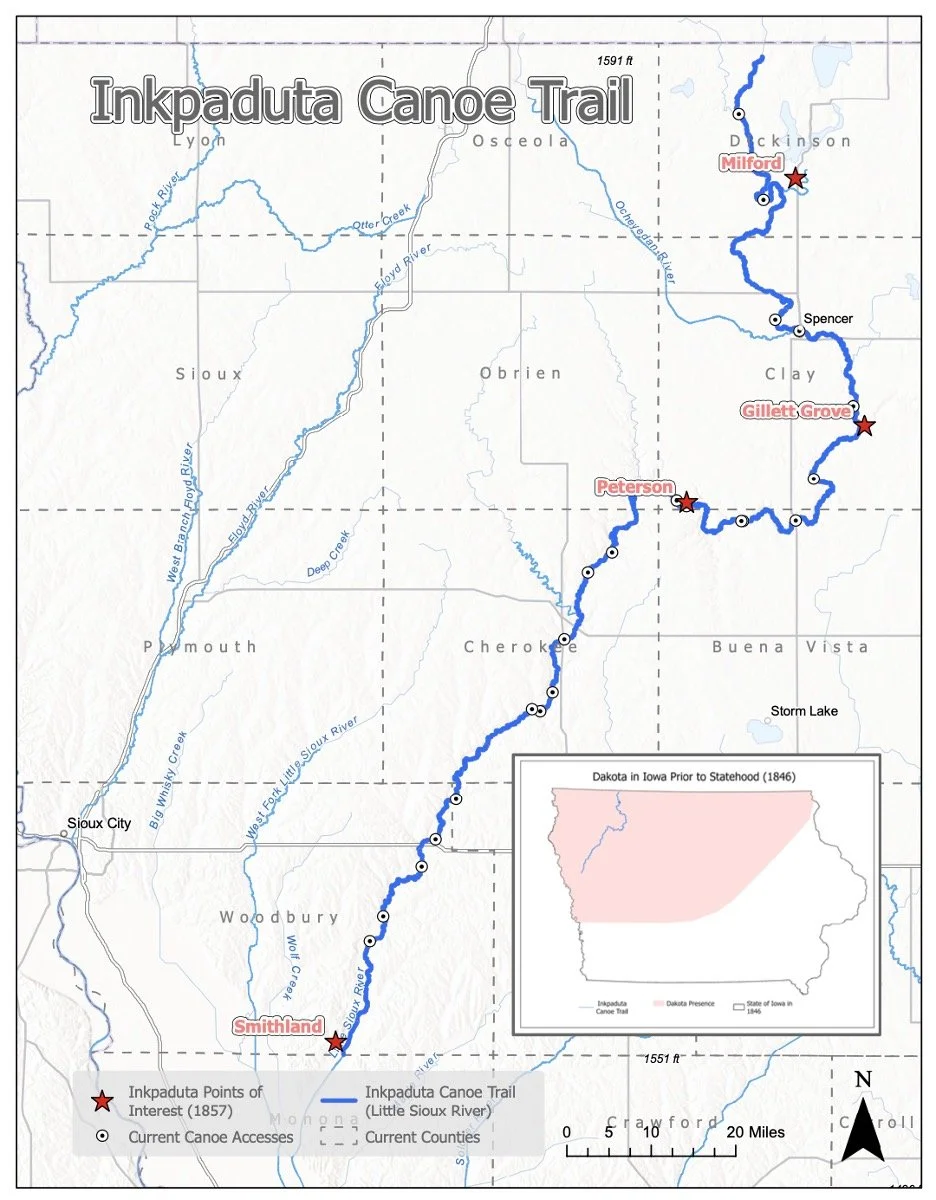
A map of the Little Sioux River and the route Inkpaduta and the Wahpekute took north with points of interest labeled with red stars.
(Image: Iowa DNR Water Trails Program)
When the Wahpekute reached Spirit Lake—expecting it to be unoccupied—they instead found it newly settled by Americans. Years of displacement, the murder of Sintominiduta, expulsion at gunpoint from Smithland, starvation, and recent killings culminated in an eruption of violence. In March 1857, the band attacked the Spirit Lake settlements, killing thirty-nine settlers and taking four captives in a desperate, defiant act. Unlike countless depictions of this event in the popularized histories that were to follow, the violence at Spirit Lake was shaped by long-term dispossession rather than sudden savagery.
Inkpaduta fled west with the two surviving captives, ultimately selling them as he moved beyond U.S. reach. Rejecting his sons’ plea to return to Iowa, he insisted the homeland was lost to settlement. Inkpaduta spent the rest of his life resisting U.S. expansion—fighting in the U.S.–Dakota War of 1862, against Sully in 1864, and at the Battle of the Little Bighorn in 1876. After joining Sitting Bull in Canada, he lived outside the reservation system he had always opposed. Inkpaduta died in Manitoba in 1881, having spent his life defending the autonomy of his people and refusing to submit to the forces that drove him from Iowa.
Interpreting Complex History Along the Little Sioux River
Inkpaduta’s forced flight west erased Dakota perspectives from Iowa’s historical narrative, even though their displacement resulted from ecological collapse, loss of land, and failed diplomacy. By the winter of 1856–57—a brutal season that left both settlers and Dakota desperate—the Wahpekute faced starvation and the near impossibility of maintaining traditional lifeways. Into this volatile environment stepped settlers like Abbie Gardner’s family, who occupied Dakota homelands believing the land was “free” under American notions of property and manifest destiny.
Abbie’s later bestseller about her captivity became the dominant Spirit Lake narrative: a story of innocent settlers and savage attackers. This framing obscured the deeper context of Dakota dispossession and the desperate conditions that shaped Inkpaduta’s actions. While the killings at Spirit Lake cannot be excused, they were rooted in hunger, marginalization, violence and the collapse of Dakota autonomy—not senseless brutality.
The Spirit Lake story endures because it fits the American myth of empty land and heroic settlement, masking the centuries-long Dakota presence and land stewardship that preceded statehood. The settlers’ transformation of the landscape—clearing forests, draining wetlands, plowing prairies—produced both the displacement of the Dakota and long-term environmental degradation that continues to affect Iowa.
Ultimately, the Spirit Lake narrative is not a simple tale of heroes and villains but a reflection of systems, choices, and competing relationships to land. Fully understanding Iowa’s past requires recognizing the Dakota not only as attackers or victims but as a people with deep ecological knowledge and a longstanding connection to the region. Only by including those erased perspectives can a more truthful and balanced history emerge.
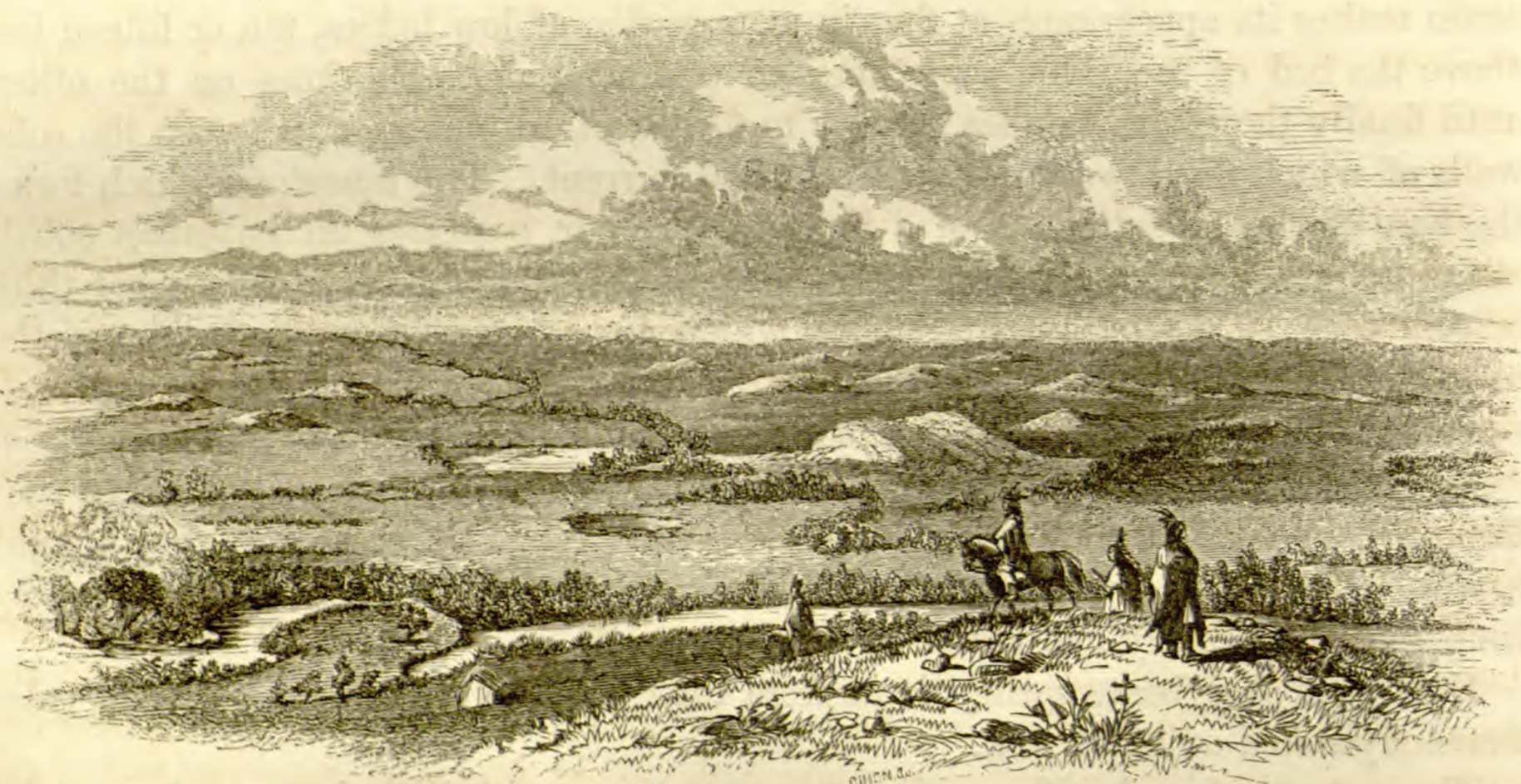
"Knobby drift" by David Dale Owen
(Painting: David Dale Owen 1852, The University of Iowa Office of the State Archaeologist)
Further Reading and Information
References & Acknowledgements
This section, “The Dakota in Iowa,” was developed and written Dr. Kevin Mason and James A.M. Ritchie under the original title, “The Land Remembers: The Dakota in Northwest Iowa”. Garrie Kills A Hundred and Ziic’iya (Dennis Gill) aided in the development of this section along with Sara Childers, the Tribal Historic Preservation Officer of the Flandreau Santee Sioux Tribe. Edits were made by Elizabeth C. Reetz and Chérie Haury-Artz.
This section was adapted for the web by Jordan Barry. The heading image is Three men on horses in the Great Plains ca. 1905, and accessed through the Library of Congress.
This section along with the pages; “Ecosystems, Culture & History, Wildlife & Geology” were prepared for Iowa Department of Natural Resources Water Trails Program under coordination by John Wenck.